
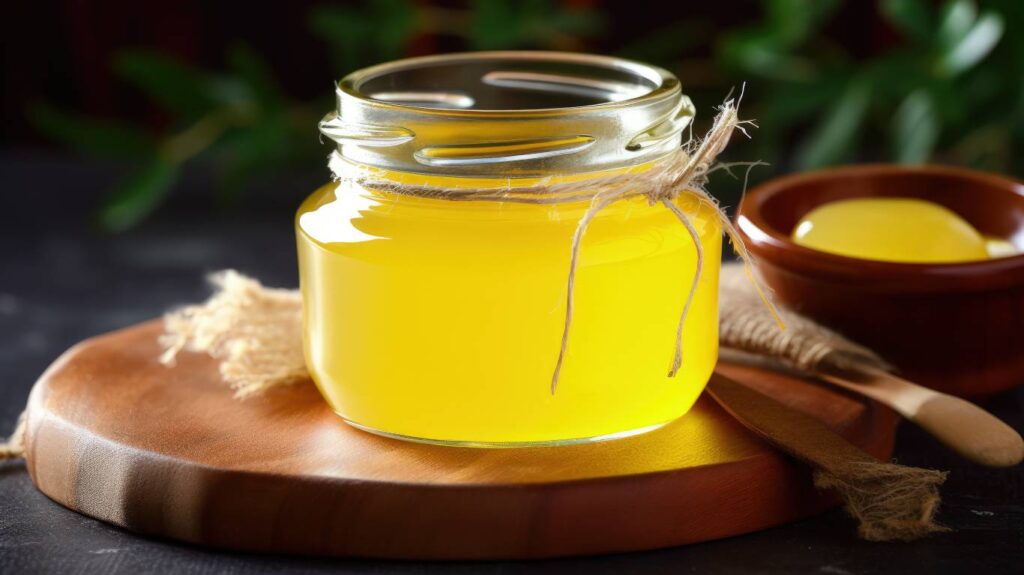
Ghee has been part of Indian kitchens for thousands of years. What kept it there wasn’t marketing or trend; it was experience. Generations observed that food cooked in ghee digested differently. It settled the stomach and it seemed to build strength from within.
Today, we will look at these observations through the lens of nutritional science and begin to understand why.
What Ghee Actually Is
Ghee is clarified butter with its water and milk solids removed through gentle heating. This process concentrates the fat-soluble nutrients and creates a stable cooking medium that doesn’t spoil easily (an important consideration in a time before refrigerators).
The removal of milk proteins (casein) and milk sugar (lactose) means most people who react to dairy can use ghee without issue. What remains is primarily fat, along with small amounts of vitamins A, E, and K2.
The Butyrate Connection
Ghee contains butyric acid, a short-chain fatty acid. Your colon cells prefer butyrate as their primary fuel source. Research published in The Journal of Nutrition (2009) shows that butyrate helps maintain the intestinal barrier and may reduce inflammation in the gut lining.
Your gut bacteria also produce butyrate when they ferment fiber. Ghee provides it directly, though in smaller amounts than what a fiber-rich diet generates through fermentation.
Science here is emerging, not definitive. Studies on butyrate’s effects have mostly been conducted in cell cultures or animal models. Human clinical trials are limited. Here’s what we can say: butyrate appears to support colon cell health. Whether dietary butyrate from ghee produces the same effects as microbially-produced butyrate remains an open question as of now.
Fat-Soluble Nutrient Absorption
Vitamins A, D, E, and K require fat for absorption. Without adequate fat in a meal, these nutrients largely pass through unabsorbed. This isn’t controversial; it’s basic biochemistry taught in nutrition courses worldwide.
Ghee provides this fat. So does olive oil, avocado, nuts, or any other fat source. Ghee’s advantage is cultural: it pairs naturally with Indian vegetables, lentils, and grains that are rich in these vitamins. The Ayurvedic practice of cooking herbs and spices in ghee may have persisted because it works (the fat acts as a solvent for the aromatic compounds, changing both flavor and potential bioavailability).
The Digestive Comfort Factor
Many people report that ghee-cooked food feels easier to digest. The mechanism isn’t fully mapped yet, but fat does slow gastric emptying, which can reduce post-meal blood sugar spikes and create a feeling of sustained satisfaction.
Ghee’s liquid consistency at body temperature means it doesn’t solidify in the digestive tract the way some saturated fats do. Traditional texts describe ghee as having a “lubricating” quality. Modern language might frame this as supporting smooth intestinal motility, though clinical studies, specifically on ghee and bowel movements, are scarce.
For constipation, adequate fat intake matters. Some Ayurvedic practitioners recommend a teaspoon of ghee in warm milk before bed for this purpose. Does it work? Many report yes. Is it the ghee, the warm liquid, the ritual, or the combination? We don’t have controlled trials to say.
What Ayurvedic Texts Say
The Ashtanga Hridayam, an Ayurvedic text from approximately 600 CE, describes ghee as deepana (digestive stimulant) and pachana (digestive aid). The text Charaka Samhita considers ghee among the most satmya substances (those compatible with human physiology across constitutions).
One often-cited verse from Charaka Samhita, Sutrasthana 13.13-14 states:
“Ghee, oil, fat and marrow are considered the best amongst all the unctuous substances; amongst these again, owing to its peculiar adaptability in pharmaceutic preparations, ghee is the best. Ghee is curative of pitta and vata, is beneficial to the nutrient bodyfluid, semen and vital essence. It is refrigerant and emollient and clarifies the voice and complexion.”
These claims are cultural observations encoded in medical poetry. What they tell us: ghee was valued not as a luxury but as medicine. Its use wasn’t casual.
What We Don’t Know
Science hasn’t caught up with tradition here. We don’t have large-scale human studies on ghee’s effects on IBS, inflammatory bowel disease, or acid reflux. We do have mechanisms that seem plausible (butyrate, fat-soluble vitamins, easy digestibility).
The claims around “detoxification” in Ayurveda relate to Panchakarma therapy, where medicated ghee is used in controlled clinical settings to mobilize ama (loosely translated as metabolic waste). This isn’t something to attempt at home, and it’s not something modern toxicology recognizes in the same framework.
How to Use Ghee
If you want to include ghee for digestive support:
Start small. A teaspoon in your morning dal or rice. Notice how you feel over weeks, not days.
Quality matters. Ghee made from cultured butter (fermented cream) may contain beneficial bacterial metabolites. Ghee from A2 milk of desi cow breeds is preferred in Ayurveda, though scientific evidence for superiority is limited.
What’s non-negotiable: purity. Adulterated ghee with vegetable oils or synthetic butter is common in markets. Source from producers with transparent processes and a commitment to purity.
Context matters. Ghee works within a diet, not despite it. If your diet is low in fiber, adding ghee won’t fix gut issues. If you’re eating inflammatory foods regularly, ghee won’t override that.
Traditional uses:
- A teaspoon in warm water first thing in morning (supports bowel movement)
- Drizzled over cooked lentils and rice (enhances satiety and taste)
- Mixed with turmeric or triphala powder (traditional medicinal preparation)
Ghee’s Impact on your Health
Ghee has been used for thousands of years by millions of people as food and medicine. Modern science is beginning to understand some mechanisms that might explain why. The gap between traditional use and clinical proof is real.
Your digestion is complex. It’s affected by stress, sleep, gut bacteria, genetics, what you ate yesterday, and what you’ll eat tomorrow. No single food is a cure. But some foods do support the system better than others.
Ghee appears to be one of them, when used as part of a whole, balanced approach to eating and living.