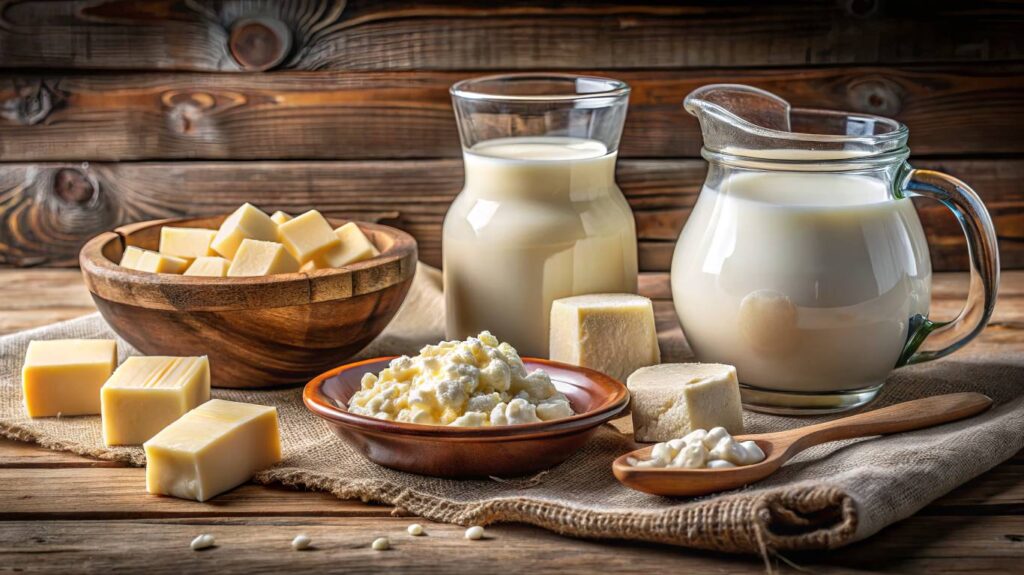
Dairy products show up in diets worldwide, but the conversations around it have become unnecessarily complicated. Milk, yogurt, cheese, paneer, buttermilk: these aren’t mysterious superfoods or dietary villains. They’re concentrated sources of specific nutrients that some people need more of, and others can do with less, or even without.
The question worth asking: what does dairy actually provide, and who benefits from including it?
What Dairy Delivers
Dairy provides several nutrients that can be harder to obtain elsewhere:
Research confirms that adequate calcium intake, particularly when combined with vitamin D, supports bone density and may reduce fracture risk in older adults. A cup of milk provides roughly 300mg of calcium. For someone who doesn’t eat sardines with bones, leafy greens in large quantities, or fortified plant milks, dairy becomes the most straightforward calcium source.
Milk contains both casein (80%) and whey (20%). Both provide all essential amino acids needed for protein synthesis. While whey digests quickly, casein takes longer. This difference may matter for athletes that are timing their protein intake around training schedules, but for most people eating regular meals, total daily protein intake matters more than digestion speed.
Dairy also provides riboflavin (B2), vitamin B12, phosphorus, potassium, and in fortified versions, vitamin D. These aren’t exclusive to dairy, but dairy delivers them in a compact package.
The Lactose Reality
Approximately 65-70% of the global adult population has reduced lactase activity, the enzyme needed to digest lactose. This isn’t a disease or deficiency; it’s the biological default for humans post-weaning. Lactase persistence (the ability to digest milk sugar into adulthood) evolved relatively recently in populations with long dairy farming histories, primarily in Northern Europe and parts of Africa.
Geography predicts tolerance fairly reliably: Northern Europeans show 5-10% intolerance rates. East Asians show 70-100%. Southern Europeans, Middle Eastern populations, and most of Africa and South America fall somewhere between.
Fermented dairy changes the equation. Yogurt and aged cheese contain significantly less lactose than fresh milk because bacterial fermentation converts lactose into lactic acid. Many people who can’t tolerate a glass of milk handle yogurt or hard cheese without issues.
Who Benefits Most from Dairy
Growing children and adolescents build peak bone mass during their developmental years. Adequate calcium during these years may reduce osteoporosis risk decades later. Dairy provides both calcium and the vitamin D often added to it.
Postmenopausal women experience bone density decline due to reduced estrogen. Calcium and vitamin D supplementation or adequate dietary intake can slow this loss, though it won’t fully prevent it.
Athletes and physically active individuals have increased protein needs. Dairy proteins, particularly whey, stimulate muscle protein synthesis effectively due to high leucine content and rapid absorption.
Vegetarians who exclude meat remove several protein sources from their diet. Dairy fills that gap while also providing vitamin B12, which is absent from plant foods unless fortified.
Who Might Skip It
If you experience bloating, gas, or diarrhea after dairy, you’re likely lactose intolerant. Fermented dairy may work for you. Lactose-free milk exists. Or simply get calcium and protein from other food sources.
If your diet includes fortified plant milks, leafy greens, tofu, sardines, and diverse protein sources, dairy adds convenience but not necessity.
Some evidence suggests that dairy may aggravate acne in susceptible individuals. High-fat dairy increases saturated fat intake, which some people need to moderate for cardiovascular reasons.
Practical Inclusion
Choose yogurt or buttermilk with live cultures for gut health. Probiotics support digestive function, and fermentation reduces lactose content. Combine dairy with weight-bearing exercise for bone health; calcium alone won’t build bone; mechanical stress does. Whether you choose full-fat, low-fat, or fat-free depends on your overall fat intake and calorie needs. Fat carries vitamins A, D, E, and K. But if you’re already getting enough fat from other sources, low-fat dairy reduces calories without losing much nutrition.
According to the International Society of Sports Nutrition, rapidly digested proteins that contain high proportions of essential amino acids (EAAs) and adequate leucine, are most effective in stimulating muscle protein synthesis (MPS). An article published in PubMed Central states, “High-protein diet enhances muscular performance and skeletal muscle mass in resistance-trained males, irrespective of intake time. Consequently, the total daily protein intake appears to be the primary factor in facilitating muscle growth induced by exercise.”
Watch for added sugars in flavored yogurts, which often contain as much sugar as dessert. Read labels and choose plain versions, adding the fruits yourself. Ultra-pasteurized milk has extended shelf life but altered protein structure. Traditional pasteurization preserves more nutritional integrity. Some people report better digestion with A2 beta-casein milk (lacking the A1 variant), though evidence remains limited and mixed.
The Tradition Factor
Dairy has been part of human diets in dairy-farming regions for 8,000-10,000 years. Fermentation techniques developed not from nutritional science but from necessity: preserving milk without refrigeration. The fact that these fermented forms (yogurt, kefir, cheese, buttermilk) happen to be easier to digest and contain beneficial bacteria is fortunate convergence.
Ayurvedic medicine classified dairy products by their effects on digestion, constitution, and season. These classifications reflect careful observation, even if the explanatory framework differs from modern biochemistry. The recommendation to consume buttermilk after heavy meals or yogurt with spices aligns with what we now understand about probiotics and digestive enzymes.
Why Traditional Methods Score Higher
Industrial dairy processing prioritizes shelf stability, uniform consistency, and high-volume production. Traditional methods prioritize the product working as food.
Culturing cream before churning butter creates both ghee and probiotic-rich buttermilk. Using milk from grass-fed, well-treated cows affects the nutrient profile. Avoiding ultra-pasteurization preserves protein structure.
These are considerations that affect what the product actually is and how it functions in your body. Dairy isn’t essential for everyone, but for those who choose to include it and don’t face health challenges, quality matters more than quantity. The effect of a glass of properly fermented buttermilk after a meal is different than a glass of ultra-pasteurized skim milk. Traditional whole-milk yogurt with live cultures benefits differently than sweetened, thickened, pasteurized yogurt-flavored product.
Know what you’re consuming, why you’re consuming it, and whether it’s actually providing what you think it does.